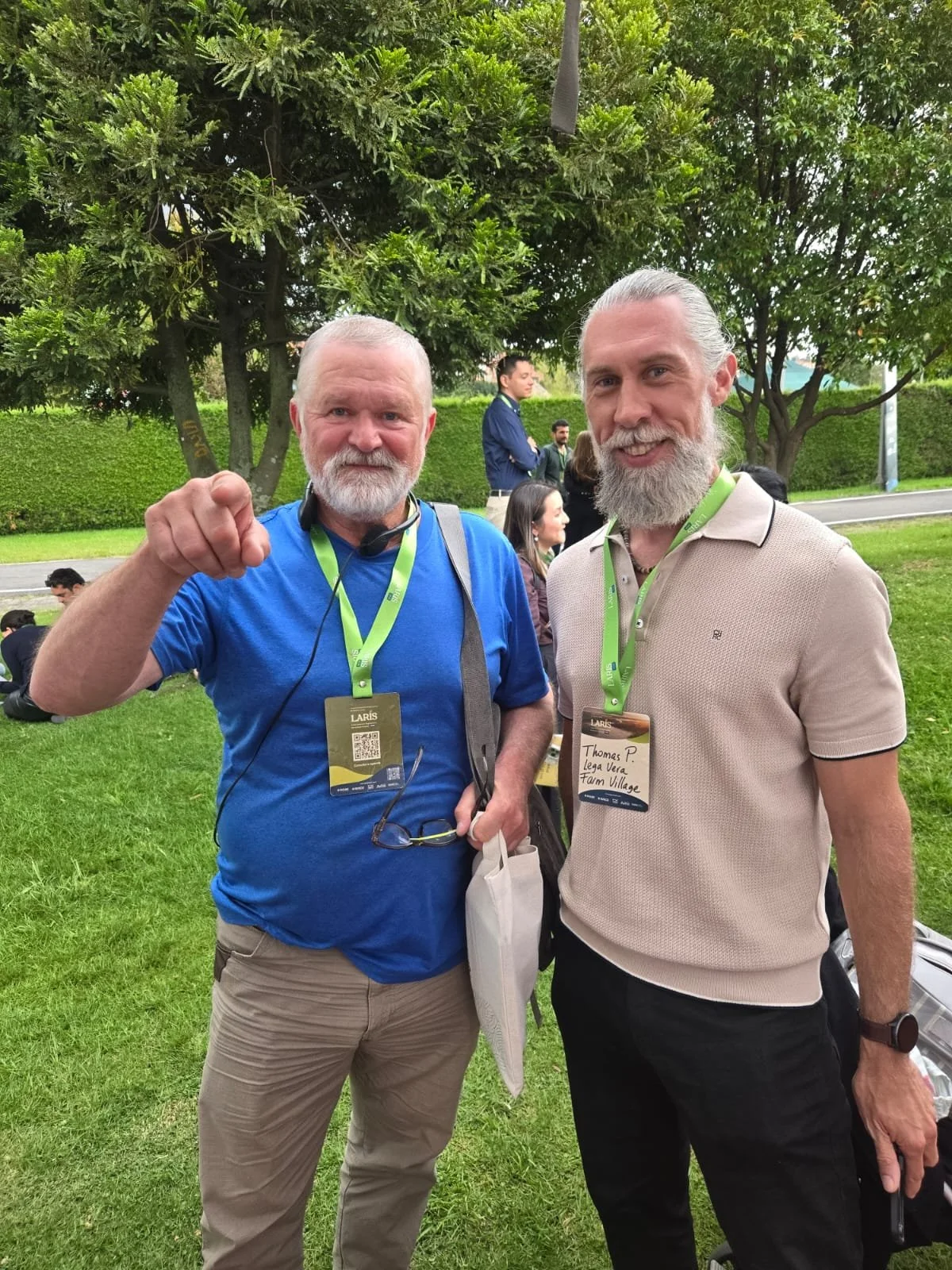
Lega Vera welcomes one of the most influential professionals in restoration agriculture into the heart of its vision.
Mark Shepard, the internationally recognized farmer, author, and pioneer in restoration agriculture, is joining Lega Vera as a founding water and ecosystem design partner.
Boasting decades of experience designing productive agricultural landscapes, restoring degraded land, and developing resilient farming systems, Mark will help shape the ecological foundations of the village, starting with its water management strategy.
Alongside his design work, Mark has selected a farm within the village, where he intends to establish a seasonal home, develop his own agricultural projects, and create opportunities for hands-on learning and knowledge exchange.
His decision to become part of Lega Vera marks an important milestone for the community, as we welcome an outstanding pioneer as our neighbor.
Panama? I Want to Move to Panama!
The story goes back to a regenerative agriculture conference in Bogotá, Colombia.
Thomas Patton, founder of Lega Vera, had been studying regenerative agriculture for over a decade. Among the authors who influenced his early thinking was Mark Shepard, particularly through his books Restoration Agriculture, and Water for Any Farm.
When Thomas introduced himself during the conference, Mark’s response was simple:
Panama? I want to move to Panama!
That opened the door to a conversation about Lega Vera, Coquira Soil Project, and the wider agricultural operations in Chepo. What followed was an immediate connection around farming, ecological restoration, and the opportunities Panama could offer.
Learning more about these existing projects allowed Mark to see the agricultural experience and long-term commitment behind Lega Vera, as well as the potential to apply his knowledge across a much larger landscape.
Designing the Ecological Foundations of Lega Vera
One of Mark's first contributions to Lega Vera will be to shape the village's water management strategy, and a foundational part of designing a productive and resilient agricultural landscape.
Drawing on decades of experience working with agricultural landscapes, Mark will help us explore how rainfall can be captured, slowed, spread, infiltrated, and stored across the property. Depending on the characteristics of each area, this could involve water harvesting ponds, keyline-inspired earthworks, improved infiltration, and strategically placed water storage.
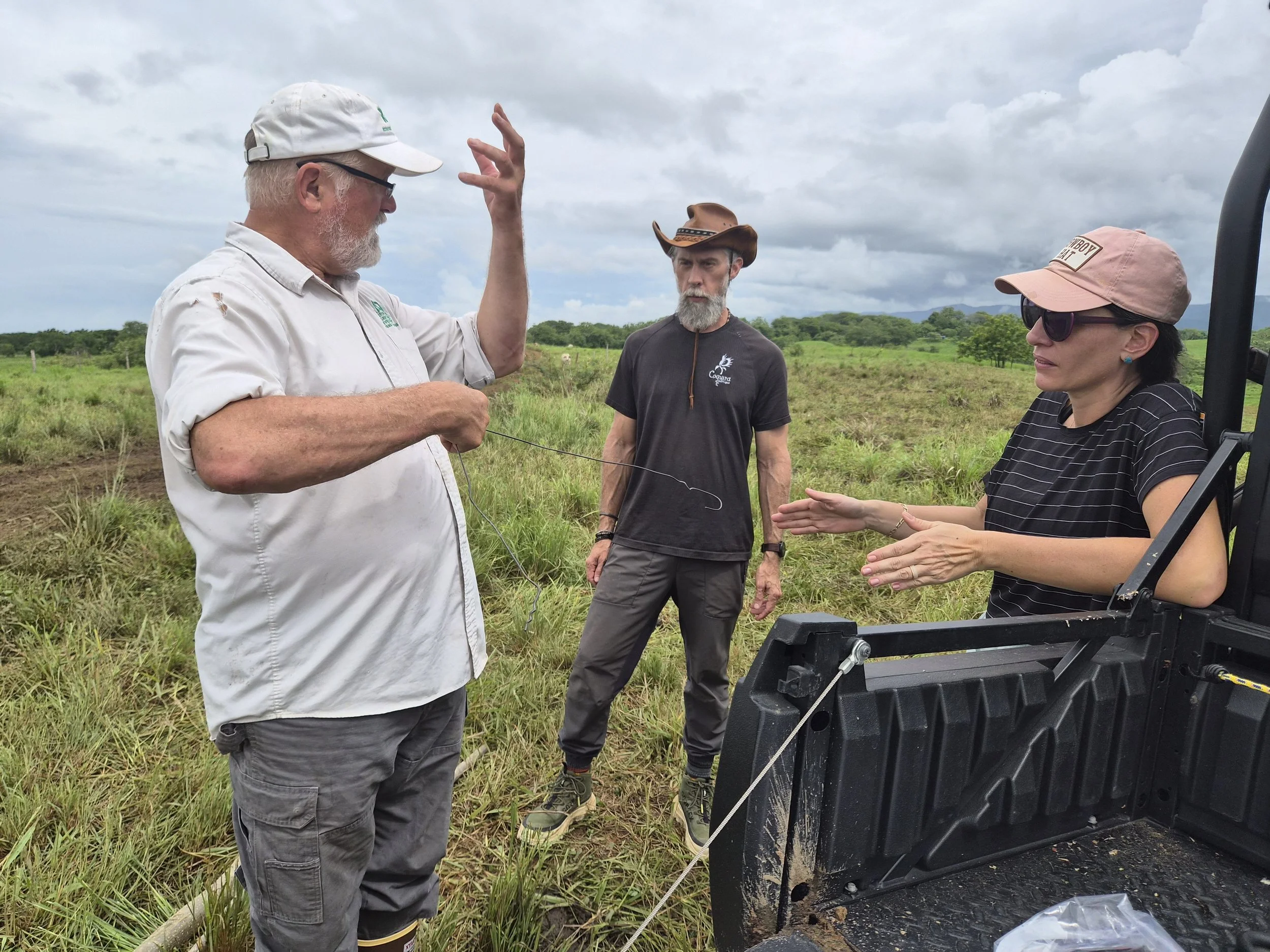
The goal is to develop a water management strategy that works with the natural features of the landscape while supporting the needs of the farms, shared agricultural areas, and the wider ecosystem. These decisions will help inform how we approach the land as Lega Vera develops, with water management considered alongside soil health, agroforestry, and agricultural production from the beginning.
Water management is only one of several areas in which Mark's experience can contribute to the long-term development of Lega Vera. His work in restoration agriculture also encompasses perennial cropping systems, agroforestry, livestock integration, soil restoration, and the productive use of agricultural land.
His work is an important part of Lega Vera's long-term vision: designing a farm village where water management, soil health, and agricultural production work together to create a productive landscape that can thrive for generations.
The Vision for Our Farm Village
Mark has selected a farm within Lega Vera, where he plans to establish a seasonal home and develop his own agricultural projects. The property has two hills with a valley between them, offering interesting opportunities to experiment with water management, agroforestry, and other restoration agriculture practices.
Over time, his goal is to build a working farm where residents and visiting farmers can see different approaches in practice, exchange ideas, and learn from the results. His presence also creates opportunities for the kind of knowledge-sharing that happens naturally when people with different backgrounds and experiences live in the same community.
Mark will also help guide a nursery and propagation operator, so seedlings, trees, and planting material is plentiful and available for all agroforestry projects by Lega Vera residents or by other regenerative farmers in the area.
For Lega Vera residents, having someone of Mark’s caliber as their neighbor makes it easier to access agricultural knowledge and learn from someone with decades of practical experience. It also illustrates how individual farms can develop complementary activities that benefit the wider community.
The Soil Council
Thomas describes Mark as possessing a type of intelligence that cannot be obtained through academic study alone.His knowledge is the product of decades of observation, experimentation, and living with agricultural landscapes.
Mark's arrival also reflects a broader ambition for Lega Vera: bringing together exceptional people whose experience, knowledge, and interests can contribute to the development of the community.
This is the thinking behind the Soil Council, an initiative envisioned as a network of practitioners, educators, and leaders in regenerative agriculture and related disciplines. A collective knowledge that can shape the way the village approaches agriculture, ecological stewardship, and community life, while creating opportunities for residents to learn from people working at the forefront of their respective fields.
Their involvement will play a central part in developing Lega Vera as one of the most unique farm villages in Panama and Latin America.